NEW! SearchBlox is now an Adobe Platinum Technology Partner. I Get Started.




NEW! SearchBlox is now an Adobe Platinum Technology Partner. I Get Started.
NEW! SearchBlox is now an Adobe Platinum Technology Partner. I Get Started.


Knowledge Graph 101
Knowledge Graph 101
The Definitive Guide
The Definitive Guide
to
to
Knowledge Graph
Knowledge Graph
Move from surface-level results to deeper context, trusted personalization, and a structured understanding of how everything relates.
Move from surface-level results to deeper context, trusted personalization, and a structured understanding of how everything relates.
Understand how entities and relationships form the core of a Knowledge Graph.
Break down the building blocks: entities, attributes, and relationships.
See why structured relationships improve search and AI understanding.
Knowledge Graph 101
The Definitive Guide
to
Knowledge Graph
Move from surface-level results to deeper context, trusted personalization, and a structured understanding of how everything relates.
Understand how entities and relationships form the core of a Knowledge Graph.
Break down the building blocks: entities, attributes, and relationships.
See why structured relationships improve search and AI understanding.
Introduction to Knowledge Graphs
Introduction to Knowledge Graphs
AI Search surfaces what matches.
Knowledge Graph–powered search understands how everything connects.
AI Search surfaces what matches.
Knowledge Graph–powered search understands how everything connects.
AI Search surfaces what matches.
Knowledge Graph–powered search understands how everything connects.
Everything your enterprise needs to make decisions already exists. The problem is that it lives across too many systems that don’t naturally connect.
Everything your enterprise needs to make decisions already exists. The problem is that it lives across too many systems that don’t naturally connect.
Policies sit in one place. Updates live somewhere else. Context is buried in tickets, emails, or chat threads. Nothing is technically missing — but nothing is aligned either.
We can use Retrieval Augmented Generation (RAG) to address the limitations of large language models – incorporating real-time, reliable information grounded in the latest internal data.
Search can retrieve what matches your query. It cannot show how those pieces relate. So people still open multiple tabs, double-check details, and ask someone else to confirm what’s correct.
We can use Retrieval Augmented Generation (RAG) to address the limitations of large language models – incorporating real-time, reliable information grounded in the latest internal data.
Knowledge Graphs addresses these frictions by accurately modeling how entities, systems, and events relate across the enterprise. When those relationships are visible, search becomes clearer — and AI responses become easier to trust.
We can use Retrieval Augmented Generation (RAG) to address the limitations of large language models – incorporating real-time, reliable information grounded in the latest internal data.
RAG integrates your organization’s vast knowledge base—documents, databases, or any other relevant data source—with the LLM, enabling your AI applications to scour through specific data sets outside of its training domain.
Enterprise knowledge graph search helps organizations move from searching for content to understanding information. It looks beyond files and systems to recognize people, data, and relationships — and how they connect across the business — so results reflect real intent, not just keywords.
Enterprise knowledge graph search helps organizations move from searching for content to understanding information. It looks beyond files and systems to recognize people, data, and relationships — and how they connect across the business — so results reflect real intent, not just keywords.
By unifying structured and unstructured data into a single knowledge layer, it reveals insights that would otherwise stay hidden and gives AI a reliable foundation to work from. Answers become more accurate, more consistent, and easier to trust.
By unifying structured and unstructured data into a single knowledge layer, it reveals insights that would otherwise stay hidden and gives AI a reliable foundation to work from. Answers become more accurate, more consistent, and easier to trust.
In this guide, we explore how knowledge graphs work and why they are becoming essential for modern enterprise search and AI. You’ll also see how SearchBlox SearchAI combines knowledge graphs, hybrid search, and native RAG to turn fragmented enterprise data into personalized recommendations, accurate answers, useful summaries, and conversational experiences — delivered consistently across search, chat, and AI agents.
In this guide, we explore how knowledge graphs work and why they are becoming essential for modern enterprise search and AI. You’ll also see how SearchBlox SearchAI combines knowledge graphs, hybrid search, and native RAG to turn fragmented enterprise data into personalized recommendations, accurate answers, useful summaries, and conversational experiences — delivered consistently across search, chat, and AI agents.

Discover What’s Possible
Your enterprise data — contextual, personalized and relevant with SearchAI
Discover What’s Possible
Your enterprise data — contextual, personalized and relevant with SearchAI
Discover What’s Possible
Your enterprise data — contextual, personalized and relevant with SearchAI
What is a Knowledge Graph?
What is a Knowledge Graph?
Knowledge Graph Search lets you search facts, entities, and relationships - not just text - and is the foundation for trustworthy, explainable AI search.
Knowledge Graph Search lets you search facts, entities, and relationships - not just text - and is the foundation for trustworthy, explainable AI search.
Knowledge Graph Search lets you search facts, entities, and relationships - not just text - and is the foundation for trustworthy, explainable AI search.
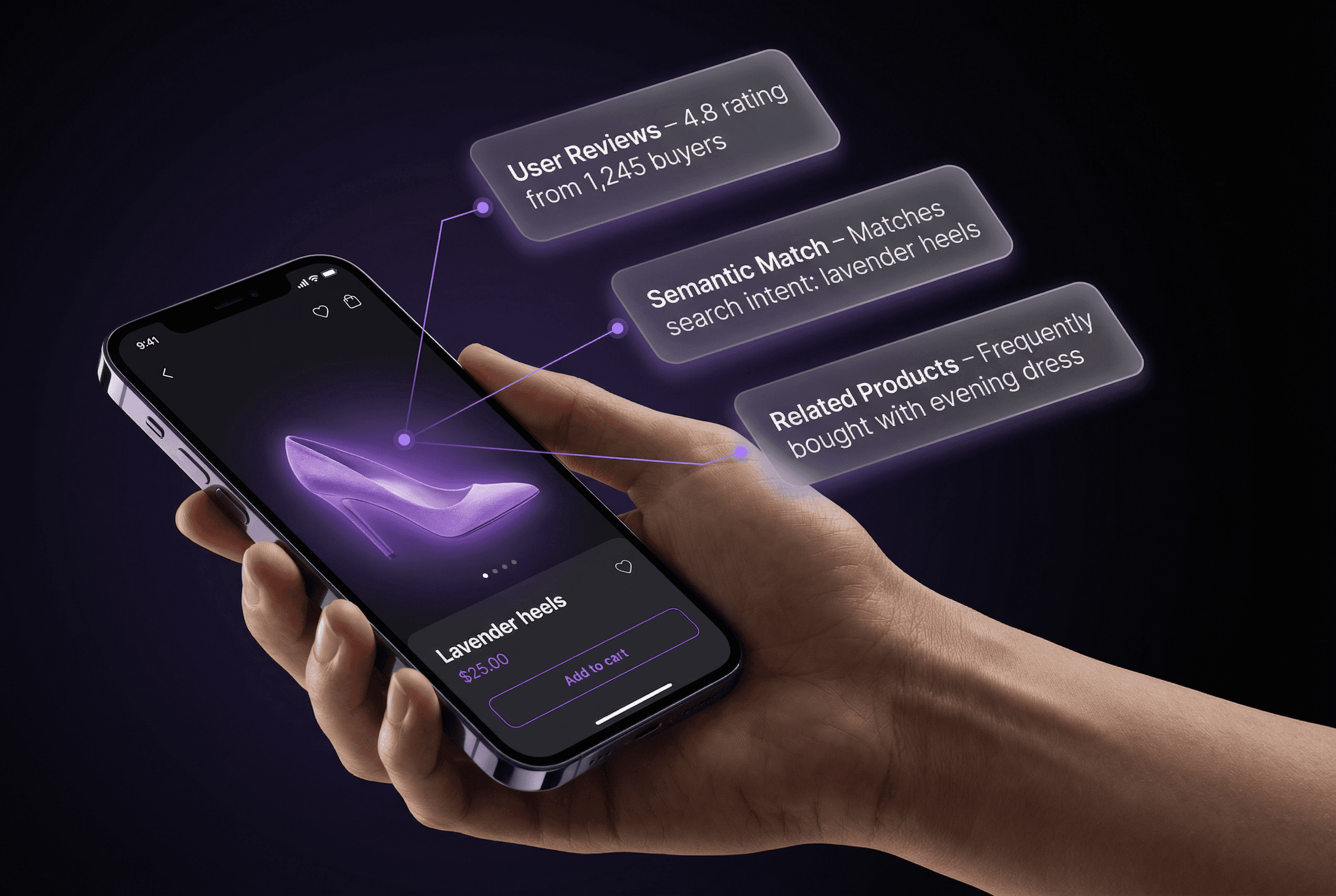
A knowledge graph is a structured representation of information that connects entities, relationships, and attributes into a unified semantic model. Unlike traditional search systems that rely on isolated documents or keyword matching, a knowledge graph models how data points relate to one another across systems.
A knowledge graph is a structured representation of information that connects entities, relationships, and attributes into a unified semantic model. Unlike traditional search systems that rely on isolated documents or keyword matching, a knowledge graph models how data points relate to one another across systems.
By defining entities such as people, products, policies, and processes — and mapping how they connect — a knowledge graph creates a living semantic layer that enables contextual search, reasoning, and explainable AI.
By defining entities such as people, products, policies, and processes — and mapping how they connect — a knowledge graph creates a living semantic layer that enables contextual search, reasoning, and explainable AI.
In enterprise environments, this structured relationship model allows systems to understand meaning, not just text.
In enterprise environments, this structured relationship model allows systems to understand meaning, not just text.
At its core, a knowledge graph is built on three fundamental components:
Entities – the “things” an organization cares about (for example, employees, customers, policies, products, projects, or applications).
Attributes – descriptive details about those entities (such as names, dates, roles, locations, or statuses).
Relationships – the meaningful connections between entities (for example, an employee works on a project, a document is governed by a policy, or a customer uses a product).
At its core, a knowledge graph is built on three fundamental components:
Entities – the “things” an organization cares about (for example, employees, customers, policies, products, projects, or applications).
Attributes – descriptive details about those entities (such as names, dates, roles, locations, or statuses).
Relationships – the meaningful connections between entities (for example, an employee works on a project, a document is governed by a policy, or a customer uses a product).
Together, these components form a graph structure where information is linked rather than siloed. This structure mirrors how humans naturally understand information, i.e through context and connection, thus making data easier to discover, interpret, and use.
At its core, a knowledge graph is built on three fundamental components:
Entities – the “things” an organization cares about (for example, employees, customers, policies, products, projects, or applications).
Attributes – descriptive details about those entities (such as names, dates, roles, locations, or statuses).
Relationships – the meaningful connections between entities (for example, an employee works on a project, a document is governed by a policy, or a customer uses a product).
Together, these components form a graph structure where information is linked rather than siloed. This structure mirrors how humans naturally understand information, i.e through context and connection, thus making data easier to discover, interpret, and use.
Together, these components form a graph structure where information is linked rather than siloed. This structure mirrors how humans naturally understand information, i.e through context and connection, thus making data easier to discover, interpret, and use.
How Knowledge Graphs Work?
How Knowledge Graphs Work?
Knowledge Graphs unify structured and unstructured data into a dynamic semantic network — enabling systems to understand relationships, context, and meaning, not just return search results.
Knowledge Graphs unify structured and unstructured data into a dynamic semantic network — enabling systems to understand relationships, context, and meaning, not just return search results.
Knowledge Graphs unify structured and unstructured data into a dynamic semantic layer — enabling systems to understand relationships, context, and meaning, not just return search results.
Knowledge graphs are created by integrating data from multiple sources—such as content repositories, databases, enterprise applications, and third-party systems—and enriching that data with metadata and semantic meaning. The entities, attributes, and relationships are all components that are extracted from the ingested data. Each concept is identified and linked based on specific relationships from a schema and this is used to model the graph. Knowledge graphs can be built with unstructured or structured data. Technologies like natural language processing (NLP), machine learning, and entity extraction are often used to identify key entities and relationships within unstructured content such as documents, emails, and webpages.
A knowledge graph works by transforming structured and unstructured data into connected relationships. Using entity extraction and semantic modeling, systems identify key concepts and define how they relate through subject–predicate–object relationships.
These relationships are stored in a graph database, where nodes represent entities and edges represent connections. This graph structure enables systems to traverse relationships efficiently, supporting contextual retrieval, inference, and structured responses.
At the core, a Knowledge Graph combines:
A business ontology — a shared vocabulary of entities and relationships
A semantic model that understands context and meaning
A graph database that naturally represents connections
Integrated data from internal and external sources
This enables systems to answer complex queries like:
“Which products improved quarter-over-quarter revenue in regions with rising service requests?”
With context, relationships, and reasoning — not just matching text.
Knowledge graphs are created by integrating data from multiple sources—such as content repositories, databases, enterprise applications, and third-party systems—and enriching that data with metadata and semantic meaning. The entities, attributes, and relationships are all components that are extracted from the ingested data. Each concept is identified and linked based on specific relationships from a schema and this is used to model the graph. Knowledge graphs can be built with unstructured or structured data. Technologies like natural language processing (NLP), machine learning, and entity extraction are often used to identify key entities and relationships within unstructured content such as documents, emails, and webpages.
A knowledge graph works by transforming structured and unstructured data into connected relationships. Using entity extraction and semantic modeling, systems identify key concepts and define how they relate through subject–predicate–object relationships.
These relationships are stored in a graph database, where nodes represent entities and edges represent connections. This graph structure enables systems to traverse relationships efficiently, supporting contextual retrieval, inference, and structured responses.
At the core, a Knowledge Graph combines:
A business ontology — a shared vocabulary of entities and relationships
A semantic model that understands context and meaning
A graph database that naturally represents connections
Integrated data from internal and external sources
This enables systems to answer complex queries like:
“Which products improved quarter-over-quarter revenue in regions with rising service requests?”
With context, relationships, and reasoning — not just matching text.
The graph model can continuously evolve as new information is added or updated. This living structure ensures that the knowledge graph stays current and reflects the real state of the organization.
The graph model can continuously evolve as new information is added or updated. This living structure ensures that the knowledge graph stays current and reflects the real state of the organization.
One-of-a-kind Knowledge Graph Application
Ready to Apply Knowledge Graph in Your Enterprise Data?
Ready to Apply Knowledge Graph in Your Enterprise Data?
Discover how relationship-aware intelligence enhances search, chat, and agents.
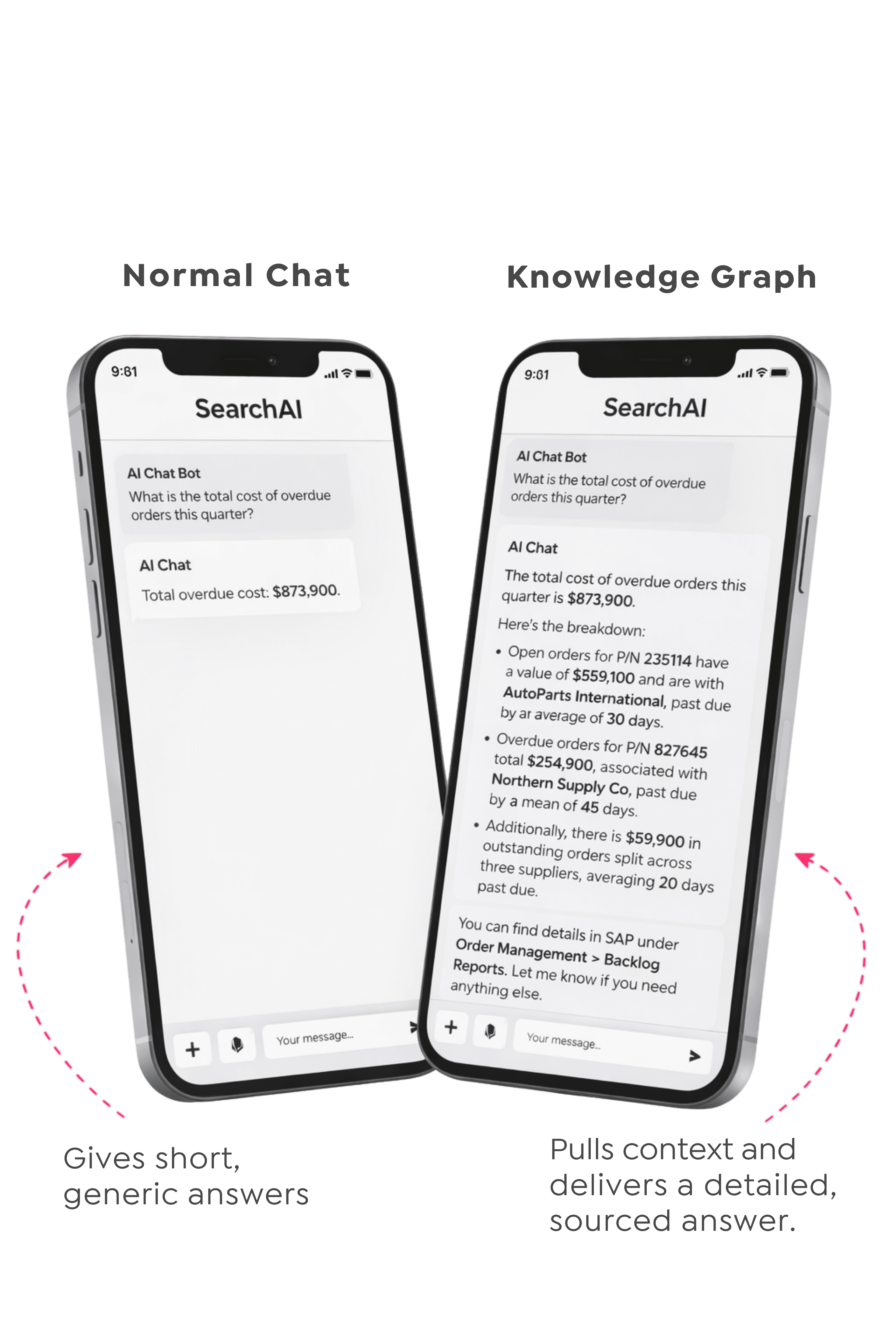
Core Components of a Knowledge Graph
Core Components of a Knowledge Graph
A knowledge graph is built on a structured foundation that connects entities, relationships, and data into a unified semantic model. These core components enable systems to represent knowledge explicitly rather than relying on isolated documents or keywords.
A knowledge graph is built on a structured foundation that connects entities, relationships, and data into a unified semantic model. These core components enable systems to represent knowledge explicitly rather than relying on isolated documents or keywords.

Creating a Unified Source of Truth
Knowledge graphs unify information from across the enterprise into a single, intelligent knowledge layer. This approach breaks down silos, improves trust in information, and delivers faster time to value with minimal disruption.

Connecting Disparate Data Sources
Enterprise data is spread across systems, teams, and formats, slowing decisions and increasing risk. The challenge isn’t data availability, it’s the inability to access trusted, connected knowledge when decisions need to be made.

Retrieval of Relevant Information
By revealing relationships and dependencies, knowledge graphs expose impact, ownership, and compliance risks. Leaders gain confidence that decisions are informed by complete, current, and connected information.

Quick Knowledge Discovery
Knowledge graph–powered enterprise search delivers contextual, role-relevant answers—not just documents. Employees spend less time searching and more time acting, directly improving productivity and execution speed.

Strategic Foundation for AI Transformation
Knowledge graphs power enterprise search, analytics, copilots, and intelligent automation. This transforms enterprise search from a cost center into a scalable, AI-ready foundation with measurable ROI.

Reduced AI Hallucinations
Knowledge graphs provide the structured context AI and RAG systems require. AI outcomes become more reliable, auditable, and aligned with business reality—critical for enterprise-scale adoption.
Creating a Unified Source of Truth
Knowledge graphs unify information from across the enterprise into a single, intelligent knowledge layer. This approach breaks down silos, improves trust in information, and delivers faster time to value with minimal disruption.
Connecting Disparate Data Sources
Enterprise data is spread across systems, teams, and formats, slowing decisions and increasing risk. The challenge isn’t data availability, it’s the inability to access trusted, connected knowledge when decisions need to be made.
Retrieval of Relevant Information
By revealing relationships and dependencies, knowledge graphs expose impact, ownership, and compliance risks. Leaders gain confidence that decisions are informed by complete, current, and connected information.
Quick Knowledge Discovery
Knowledge graph–powered enterprise search delivers contextual, role-relevant answers—not just documents. Employees spend less time searching and more time acting, directly improving productivity and execution speed.
Strategic Foundation for AI Transformation
Knowledge graphs power enterprise search, analytics, copilots, and intelligent automation. This transforms enterprise search from a cost center into a scalable, AI-ready foundation with measurable ROI.
Reduced AI Hallucinations
Knowledge graphs provide the structured context AI and RAG systems require. AI outcomes become more reliable, auditable, and aligned with business reality—critical for enterprise-scale adoption.
Creating a Unified Source of Truth
Knowledge graphs unify information from across the enterprise into a single, intelligent knowledge layer. This approach breaks down silos, improves trust in information, and delivers faster time to value with minimal disruption.
Connecting Disparate Data Sources
Enterprise data is spread across systems, teams, and formats, slowing decisions and increasing risk. The challenge isn’t data availability, it’s the inability to access trusted, connected knowledge when decisions need to be made.
Retrieval of Relevant Information
By revealing relationships and dependencies, knowledge graphs expose impact, ownership, and compliance risks. Leaders gain confidence that decisions are informed by complete, current, and connected information.
Quick Knowledge Discovery
Knowledge graph–powered enterprise search delivers contextual, role-relevant answers—not just documents. Employees spend less time searching and more time acting, directly improving productivity and execution speed.
Strategic Foundation for AI Transformation
Knowledge graphs power enterprise search, analytics, copilots, and intelligent automation. This transforms enterprise search from a cost center into a scalable, AI-ready foundation with measurable ROI.
Reduced AI Hallucinations
Knowledge graphs provide the structured context AI and RAG systems require. AI outcomes become more reliable, auditable, and aligned with business reality—critical for enterprise-scale adoption.
Creating a Unified Source of Truth
Knowledge graphs unify information from across the enterprise into a single, intelligent knowledge layer. This approach breaks down silos, improves trust in information, and delivers faster time to value with minimal disruption.
Connecting Disparate Data Sources
Enterprise data is spread across systems, teams, and formats, slowing decisions and increasing risk. The challenge isn’t data availability, it’s the inability to access trusted, connected knowledge when decisions need to be made.
Retrieval of Relevant Information
By revealing relationships and dependencies, knowledge graphs expose impact, ownership, and compliance risks. Leaders gain confidence that decisions are informed by complete, current, and connected information.
Quick Knowledge Discovery
Knowledge graph–powered enterprise search delivers contextual, role-relevant answers—not just documents. Employees spend less time searching and more time acting, directly improving productivity and execution speed.
Strategic Foundation for AI Transformation
Knowledge graphs power enterprise search, analytics, copilots, and intelligent automation. This transforms enterprise search from a cost center into a scalable, AI-ready foundation with measurable ROI.
Reduced AI Hallucinations
Knowledge graphs provide the structured context AI and RAG systems require. AI outcomes become more reliable, auditable, and aligned with business reality—critical for enterprise-scale adoption.
Connecting Disparate Data Sources
Enterprise data is spread across systems, teams, and formats, slowing decisions and increasing risk. The challenge isn’t data availability, it’s the inability to access trusted, connected knowledge when decisions need to be made.
Creating a Unified Source of Truth
Knowledge graphs unify information from across the enterprise into a single, intelligent knowledge layer. This approach breaks down silos, improves trust in information, and delivers faster time to value with minimal disruption.
Quick Knowledge Discovery
Knowledge graph–powered enterprise search delivers contextual, role-relevant answers—not just documents. Employees spend less time searching and more time acting, directly improving productivity and execution speed.
Retrieval of Relevant Information
By revealing relationships and dependencies, knowledge graphs expose impact, ownership, and compliance risks. Leaders gain confidence that decisions are informed by complete, current, and connected information.
Strategic Foundation for AI Transformation
Knowledge graphs power enterprise search, analytics, copilots, and intelligent automation. This transforms enterprise search from a cost center into a scalable, AI-ready foundation with measurable ROI.
Reduced AI Hallucinations
Knowledge graphs provide the structured context AI and RAG systems require. AI outcomes become more reliable, auditable, and aligned with business reality—critical for enterprise-scale adoption.
Connecting Disparate Data Sources
Enterprise data is spread across systems, teams, and formats, slowing decisions and increasing risk. The challenge isn’t data availability, it’s the inability to access trusted, connected knowledge when decisions need to be made.
Creating a Unified Source of Truth
Knowledge graphs unify information from across the enterprise into a single, intelligent knowledge layer. This approach breaks down silos, improves trust in information, and delivers faster time to value with minimal disruption.
Quick Knowledge Discovery
Knowledge graph–powered enterprise search delivers contextual, role-relevant answers—not just documents. Employees spend less time searching and more time acting, directly improving productivity and execution speed.
Retrieval of Relevant Information
By revealing relationships and dependencies, knowledge graphs expose impact, ownership, and compliance risks. Leaders gain confidence that decisions are informed by complete, current, and connected information.
Strategic Foundation for AI Transformation
Knowledge graphs power enterprise search, analytics, copilots, and intelligent automation. This transforms enterprise search from a cost center into a scalable, AI-ready foundation with measurable ROI.
Reduced AI Hallucinations
Knowledge graphs provide the structured context AI and RAG systems require. AI outcomes become more reliable, auditable, and aligned with business reality—critical for enterprise-scale adoption.
Connecting Disparate Data Sources
Enterprise data is spread across systems, teams, and formats, slowing decisions and increasing risk. The challenge isn’t data availability, it’s the inability to access trusted, connected knowledge when decisions need to be made.
Creating a Unified Source of Truth
Knowledge graphs unify information from across the enterprise into a single, intelligent knowledge layer. This approach breaks down silos, improves trust in information, and delivers faster time to value with minimal disruption.
Quick Knowledge Discovery
Knowledge graph–powered enterprise search delivers contextual, role-relevant answers—not just documents. Employees spend less time searching and more time acting, directly improving productivity and execution speed.
Retrieval of Relevant Information
By revealing relationships and dependencies, knowledge graphs expose impact, ownership, and compliance risks. Leaders gain confidence that decisions are informed by complete, current, and connected information.
Strategic Foundation for AI Transformation
Knowledge graphs power enterprise search, analytics, copilots, and intelligent automation. This transforms enterprise search from a cost center into a scalable, AI-ready foundation with measurable ROI.
Reduced AI Hallucinations
Knowledge graphs provide the structured context AI and RAG systems require. AI outcomes become more reliable, auditable, and aligned with business reality—critical for enterprise-scale adoption.
Connecting Disparate Data Sources
Enterprise data is spread across systems, teams, and formats, slowing decisions and increasing risk. The challenge isn’t data availability, it’s the inability to access trusted, connected knowledge when decisions need to be made.
Creating a Unified Source of Truth
Knowledge graphs unify information from across the enterprise into a single, intelligent knowledge layer. This approach breaks down silos, improves trust in information, and delivers faster time to value with minimal disruption.
Quick Knowledge Discovery
Knowledge graph–powered enterprise search delivers contextual, role-relevant answers—not just documents. Employees spend less time searching and more time acting, directly improving productivity and execution speed.
Retrieval of Relevant Information
By revealing relationships and dependencies, knowledge graphs expose impact, ownership, and compliance risks. Leaders gain confidence that decisions are informed by complete, current, and connected information.
Strategic Foundation for AI Transformation
Knowledge graphs power enterprise search, analytics, copilots, and intelligent automation. This transforms enterprise search from a cost center into a scalable, AI-ready foundation with measurable ROI.
Reduced AI Hallucinations
Knowledge graphs provide the structured context AI and RAG systems require. AI outcomes become more reliable, auditable, and aligned with business reality—critical for enterprise-scale adoption.
Connecting Disparate Data Sources
Enterprise data is spread across systems, teams, and formats, slowing decisions and increasing risk. The challenge isn’t data availability, it’s the inability to access trusted, connected knowledge when decisions need to be made.
Creating a Unified Source of Truth
Knowledge graphs unify information from across the enterprise into a single, intelligent knowledge layer. This approach breaks down silos, improves trust in information, and delivers faster time to value with minimal disruption.
Quick Knowledge Discovery
Knowledge graph–powered enterprise search delivers contextual, role-relevant answers—not just documents. Employees spend less time searching and more time acting, directly improving productivity and execution speed.
Retrieval of Relevant Information
By revealing relationships and dependencies, knowledge graphs expose impact, ownership, and compliance risks. Leaders gain confidence that decisions are informed by complete, current, and connected information.

Reduced AI Hallucinations
Knowledge graphs provide the structured context AI and RAG systems require. AI outcomes become more reliable, auditable, and aligned with business reality—critical for enterprise-scale adoption.
Strategic Foundation for AI Transformation
Knowledge graphs power enterprise search, analytics, copilots, and intelligent automation. This transforms enterprise search from a cost center into a scalable, AI-ready foundation with measurable ROI.
Connecting Disparate Data Sources
Enterprise data is spread across systems, teams, and formats, slowing decisions and increasing risk. The challenge isn’t data availability, it’s the inability to access trusted, connected knowledge when decisions need to be made.
Creating a Unified Source of Truth
Knowledge graphs unify information from across the enterprise into a single, intelligent knowledge layer. This approach breaks down silos, improves trust in information, and delivers faster time to value with minimal disruption.
Quick Knowledge Discovery
Knowledge graph–powered enterprise search delivers contextual, role-relevant answers—not just documents. Employees spend less time searching and more time acting, directly improving productivity and execution speed.
Retrieval of Relevant Information
By revealing relationships and dependencies, knowledge graphs expose impact, ownership, and compliance risks. Leaders gain confidence that decisions are informed by complete, current, and connected information.
Reduced AI Hallucinations
Knowledge graphs provide the structured context AI and RAG systems require. AI outcomes become more reliable, auditable, and aligned with business reality—critical for enterprise-scale adoption.
Strategic Foundation for AI Transformation
Knowledge graphs power enterprise search, analytics, copilots, and intelligent automation. This transforms enterprise search from a cost center into a scalable, AI-ready foundation with measurable ROI.
Connecting Disparate Data Sources
Enterprise data is spread across systems, teams, and formats, slowing decisions and increasing risk. The challenge isn’t data availability, it’s the inability to access trusted, connected knowledge when decisions need to be made.
Creating a Unified Source of Truth
Knowledge graphs unify information from across the enterprise into a single, intelligent knowledge layer. This approach breaks down silos, improves trust in information, and delivers faster time to value with minimal disruption.
Quick Knowledge Discovery
Knowledge graph–powered enterprise search delivers contextual, role-relevant answers—not just documents. Employees spend less time searching and more time acting, directly improving productivity and execution speed.
Retrieval of Relevant Information
By revealing relationships and dependencies, knowledge graphs expose impact, ownership, and compliance risks. Leaders gain confidence that decisions are informed by complete, current, and connected information.
Reduced AI Hallucinations
Knowledge graphs provide the structured context AI and RAG systems require. AI outcomes become more reliable, auditable, and aligned with business reality—critical for enterprise-scale adoption.
Strategic Foundation for AI Transformation
Knowledge graphs power enterprise search, analytics, copilots, and intelligent automation. This transforms enterprise search from a cost center into a scalable, AI-ready foundation with measurable ROI.
Connecting Disparate Data Sources
Enterprise data is spread across systems, teams, and formats, slowing decisions and increasing risk. The challenge isn’t data availability, it’s the inability to access trusted, connected knowledge when decisions need to be made.
Creating a Unified Source of Truth
Knowledge graphs unify information from across the enterprise into a single, intelligent knowledge layer. This approach breaks down silos, improves trust in information, and delivers faster time to value with minimal disruption.
Quick Knowledge Discovery
Knowledge graph–powered enterprise search delivers contextual, role-relevant answers—not just documents. Employees spend less time searching and more time acting, directly improving productivity and execution speed.
Retrieval of Relevant Information
By revealing relationships and dependencies, knowledge graphs expose impact, ownership, and compliance risks. Leaders gain confidence that decisions are informed by complete, current, and connected information.
Reduced AI Hallucinations
Knowledge graphs provide the structured context AI and RAG systems require. AI outcomes become more reliable, auditable, and aligned with business reality—critical for enterprise-scale adoption.
Strategic Foundation for AI Transformation
Knowledge graphs power enterprise search, analytics, copilots, and intelligent automation. This transforms enterprise search from a cost center into a scalable, AI-ready foundation with measurable ROI.
The Role of Knowledge Graphs in Enterprise Search
The Role of Knowledge Graphs in Enterprise Search
Knowledge graphs add structure, meaning, and relationships to enterprise data, enabling systems to reason, not just retrieve.
Knowledge graphs add structure, meaning, and relationships to enterprise data, enabling systems to reason, not just retrieve.
Knowledge graphs add structure, meaning, and relationships to enterprise data, enabling systems to reason, not just retrieve.
Financial Services
Financial institutions use knowledge graphs to connect customers, accounts, transactions, products, and regulatory rules. By modeling these relationships, they gain a unified view across systems and jurisdictions.
Healthcare & Life Sciences
Healthcare organizations build knowledge graphs to link patients, conditions, treatments, clinical guidelines, research data, and medical literature. This creates a contextual, connected view of medical knowledge.
Manufacturing & Industrial Enterprises
Manufacturers use knowledge graphs to connect equipment, processes, parts, suppliers, maintenance records, and operational data. This enables deeper insight into how assets and workflows interact.
Financial Services
Financial institutions use knowledge graphs to connect customers, accounts, transactions, products, and regulatory rules. By modeling these relationships, they gain a unified view across systems and jurisdictions.
Healthcare & Life Sciences
Healthcare organizations build knowledge graphs to link patients, conditions, treatments, clinical guidelines, research data, and medical literature. This creates a contextual, connected view of medical knowledge.
Manufacturing & Industrial Enterprises
Manufacturers use knowledge graphs to connect equipment, processes, parts, suppliers, maintenance records, and operational data. This enables deeper insight into how assets and workflows interact.
Financial Services
Financial institutions use knowledge graphs to connect customers, accounts, transactions, products, and regulatory rules. By modeling these relationships, they gain a unified view across systems and jurisdictions.
Healthcare & Life Sciences
Healthcare organizations build knowledge graphs to link patients, conditions, treatments, clinical guidelines, research data, and medical literature. This creates a contextual, connected view of medical knowledge.
Manufacturing & Industrial Enterprises
Manufacturers use knowledge graphs to connect equipment, processes, parts, suppliers, maintenance records, and operational data. This enables deeper insight into how assets and workflows interact.
Financial Services
Financial institutions use knowledge graphs to connect customers, accounts, transactions, products, and regulatory rules. By modeling these relationships, they gain a unified view across systems and jurisdictions.
Healthcare & Life Sciences
Healthcare organizations build knowledge graphs to link patients, conditions, treatments, clinical guidelines, research data, and medical literature. This creates a contextual, connected view of medical knowledge.
Manufacturing & Industrial Enterprises
Manufacturers use knowledge graphs to connect equipment, processes, parts, suppliers, maintenance records, and operational data. This enables deeper insight into how assets and workflows interact.
Financial Services
Financial institutions use knowledge graphs to connect customers, accounts, transactions, products, and regulatory rules. By modeling these relationships, they gain a unified view across systems and jurisdictions.
Healthcare & Life Sciences
Healthcare organizations build knowledge graphs to link patients, conditions, treatments, clinical guidelines, research data, and medical literature. This creates a contextual, connected view of medical knowledge.
Manufacturing & Industrial Enterprises
Manufacturers use knowledge graphs to connect equipment, processes, parts, suppliers, maintenance records, and operational data. This enables deeper insight into how assets and workflows interact.
Financial Services
Financial institutions use knowledge graphs to connect customers, accounts, transactions, products, and regulatory rules. By modeling these relationships, they gain a unified view across systems and jurisdictions.
Healthcare & Life Sciences
Healthcare organizations build knowledge graphs to link patients, conditions, treatments, clinical guidelines, research data, and medical literature. This creates a contextual, connected view of medical knowledge.
Manufacturing & Industrial Enterprises
Manufacturers use knowledge graphs to connect equipment, processes, parts, suppliers, maintenance records, and operational data. This enables deeper insight into how assets and workflows interact.
Financial Services
Financial institutions use knowledge graphs to connect customers, accounts, transactions, products, and regulatory rules. By modeling these relationships, they gain a unified view across systems and jurisdictions.
Healthcare & Life Sciences
Healthcare organizations build knowledge graphs to link patients, conditions, treatments, clinical guidelines, research data, and medical literature. This creates a contextual, connected view of medical knowledge.
Manufacturing & Industrial Enterprises
Manufacturers use knowledge graphs to connect equipment, processes, parts, suppliers, maintenance records, and operational data. This enables deeper insight into how assets and workflows interact.
Financial Services
Financial institutions use knowledge graphs to connect customers, accounts, transactions, products, and regulatory rules. By modeling these relationships, they gain a unified view across systems and jurisdictions.
Healthcare & Life Sciences
Healthcare organizations build knowledge graphs to link patients, conditions, treatments, clinical guidelines, research data, and medical literature. This creates a contextual, connected view of medical knowledge.
Manufacturing & Industrial Enterprises
Manufacturers use knowledge graphs to connect equipment, processes, parts, suppliers, maintenance records, and operational data. This enables deeper insight into how assets and workflows interact.
Financial Services
Financial institutions use knowledge graphs to connect customers, accounts, transactions, products, and regulatory rules. By modeling these relationships, they gain a unified view across systems and jurisdictions.
Healthcare & Life Sciences
Healthcare organizations build knowledge graphs to link patients, conditions, treatments, clinical guidelines, research data, and medical literature. This creates a contextual, connected view of medical knowledge.
Manufacturing & Industrial Enterprises
Manufacturers use knowledge graphs to connect equipment, processes, parts, suppliers, maintenance records, and operational data. This enables deeper insight into how assets and workflows interact.
Financial Services
Financial institutions use knowledge graphs to connect customers, accounts, transactions, products, and regulatory rules. By modeling these relationships, they gain a unified view across systems and jurisdictions.
Healthcare & Life Sciences
Healthcare organizations build knowledge graphs to link patients, conditions, treatments, clinical guidelines, research data, and medical literature. This creates a contextual, connected view of medical knowledge.
Manufacturing & Industrial Enterprises
Manufacturers use knowledge graphs to connect equipment, processes, parts, suppliers, maintenance records, and operational data. This enables deeper insight into how assets and workflows interact.
Financial Services
Financial institutions use knowledge graphs to connect customers, accounts, transactions, products, and regulatory rules. By modeling these relationships, they gain a unified view across systems and jurisdictions.
Healthcare & Life Sciences
Healthcare organizations build knowledge graphs to link patients, conditions, treatments, clinical guidelines, research data, and medical literature. This creates a contextual, connected view of medical knowledge.
Manufacturing & Industrial Enterprises
Manufacturers use knowledge graphs to connect equipment, processes, parts, suppliers, maintenance records, and operational data. This enables deeper insight into how assets and workflows interact.
Financial Services
Financial institutions use knowledge graphs to connect customers, accounts, transactions, products, and regulatory rules. By modeling these relationships, they gain a unified view across systems and jurisdictions.
Healthcare & Life Sciences
Healthcare organizations build knowledge graphs to link patients, conditions, treatments, clinical guidelines, research data, and medical literature. This creates a contextual, connected view of medical knowledge.
Manufacturing & Industrial Enterprises
Manufacturers use knowledge graphs to connect equipment, processes, parts, suppliers, maintenance records, and operational data. This enables deeper insight into how assets and workflows interact.
Manufacturing & Industrial Enterprises
Manufacturers use knowledge graphs to connect equipment, processes, parts, suppliers, maintenance records, and operational data. This enables deeper insight into how assets and workflows interact.
Healthcare & Life Sciences
Healthcare organizations build knowledge graphs to link patients, conditions, treatments, clinical guidelines, research data, and medical literature. This creates a contextual, connected view of medical knowledge.
Financial Services
Financial institutions use knowledge graphs to connect customers, accounts, transactions, products, and regulatory rules. By modeling these relationships, they gain a unified view across systems and jurisdictions.
Manufacturing & Industrial Enterprises
Manufacturers use knowledge graphs to connect equipment, processes, parts, suppliers, maintenance records, and operational data. This enables deeper insight into how assets and workflows interact.
Healthcare & Life Sciences
Healthcare organizations build knowledge graphs to link patients, conditions, treatments, clinical guidelines, research data, and medical literature. This creates a contextual, connected view of medical knowledge.
Financial Services
Financial institutions use knowledge graphs to connect customers, accounts, transactions, products, and regulatory rules. By modeling these relationships, they gain a unified view across systems and jurisdictions.
Manufacturing & Industrial Enterprises
Manufacturers use knowledge graphs to connect equipment, processes, parts, suppliers, maintenance records, and operational data. This enables deeper insight into how assets and workflows interact.
Healthcare & Life Sciences
Healthcare organizations build knowledge graphs to link patients, conditions, treatments, clinical guidelines, research data, and medical literature. This creates a contextual, connected view of medical knowledge.
Financial Services
Financial institutions use knowledge graphs to connect customers, accounts, transactions, products, and regulatory rules. By modeling these relationships, they gain a unified view across systems and jurisdictions.
Manufacturing & Industrial Enterprises
Manufacturers use knowledge graphs to connect equipment, processes, parts, suppliers, maintenance records, and operational data. This enables deeper insight into how assets and workflows interact.
Healthcare & Life Sciences
Healthcare organizations build knowledge graphs to link patients, conditions, treatments, clinical guidelines, research data, and medical literature. This creates a contextual, connected view of medical knowledge.
Financial Services
Financial institutions use knowledge graphs to connect customers, accounts, transactions, products, and regulatory rules. By modeling these relationships, they gain a unified view across systems and jurisdictions.
SearchBlox Enterprise Search
Building the Future of Intelligent Search
Building the Future of Intelligent Search
Building the Future of Intelligent Search
– Improved Information Access
– Improved Information Access
– Enhanced Analytics
– Enhanced Analytics
– Easy to deploy - On-Prem, Cloud or Hybrid Cloud
– Easy to deploy - On-Prem, Cloud or Hybrid Cloud
Hybrid Search vs Knowledge Graph - What’s the Difference?
Hybrid Search vs Knowledge Graph - What’s the Difference?
Hybrid search retrieves relevant content.
Knowledge graphs enable connected intelligence.
Hybrid search retrieves relevant content.
Knowledge graphs enable connected intelligence.
Hybrid search retrieves relevant content.
Knowledge graphs enable connected intelligence.
A knowledge graph introduces a structured semantic layer that explicitly defines how entities connect. When combined with hybrid search, it enhances retrieval with relationship-aware reasoning, enabling more structured answers and deeper contextual understanding.
Product Discovery
AI ChatBot
AI Overviews
Hybrid Search (Keyword + Vector)
Searches by keywords + meaning
Returns relevant files
Ranks by similarity
Works at the catalog level
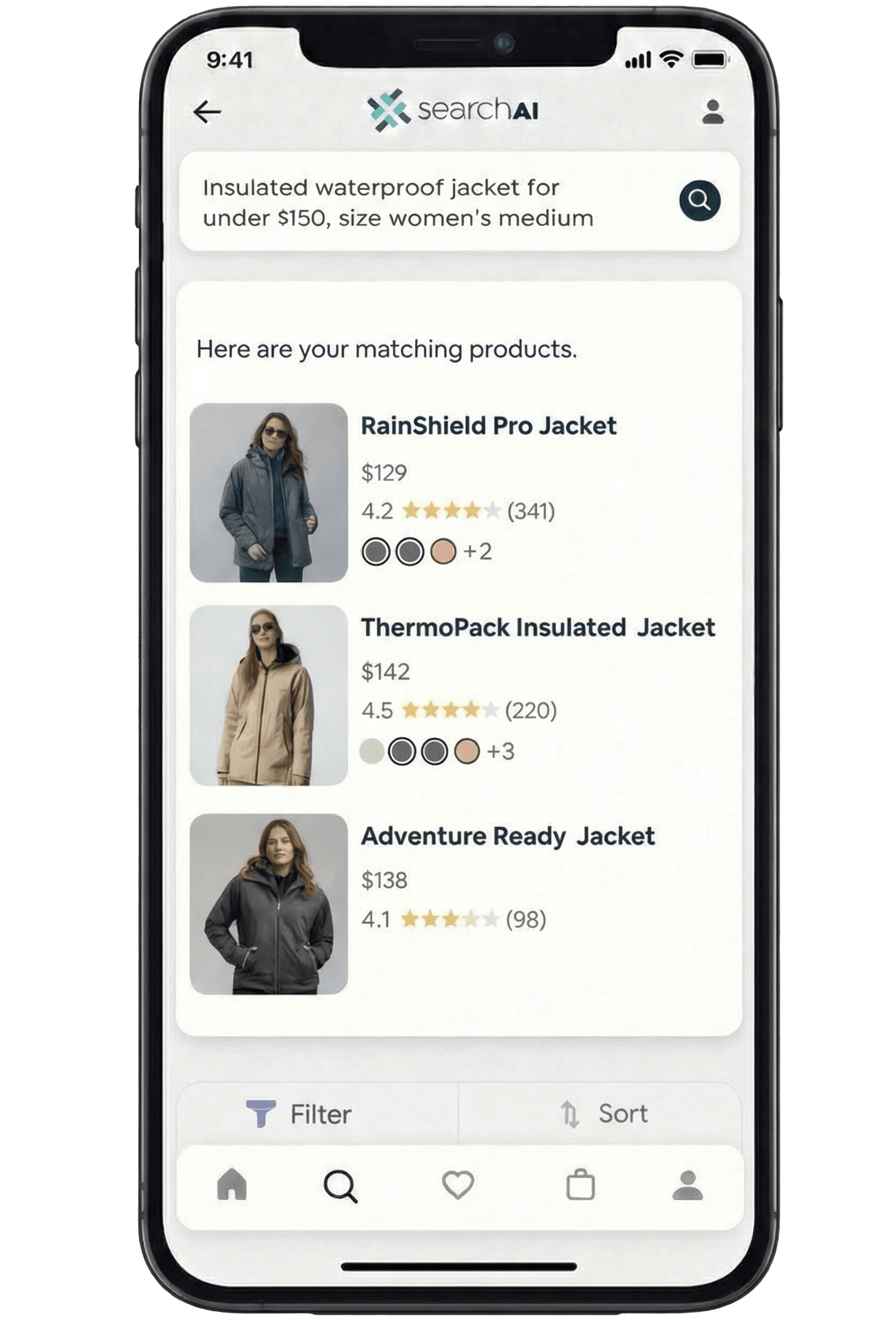
Hybrid Search with Knowledge Graph
Connects people, products, vendors, systems
Understands how they relate
Surfaces hidden relationships
Works at entity and relationship level
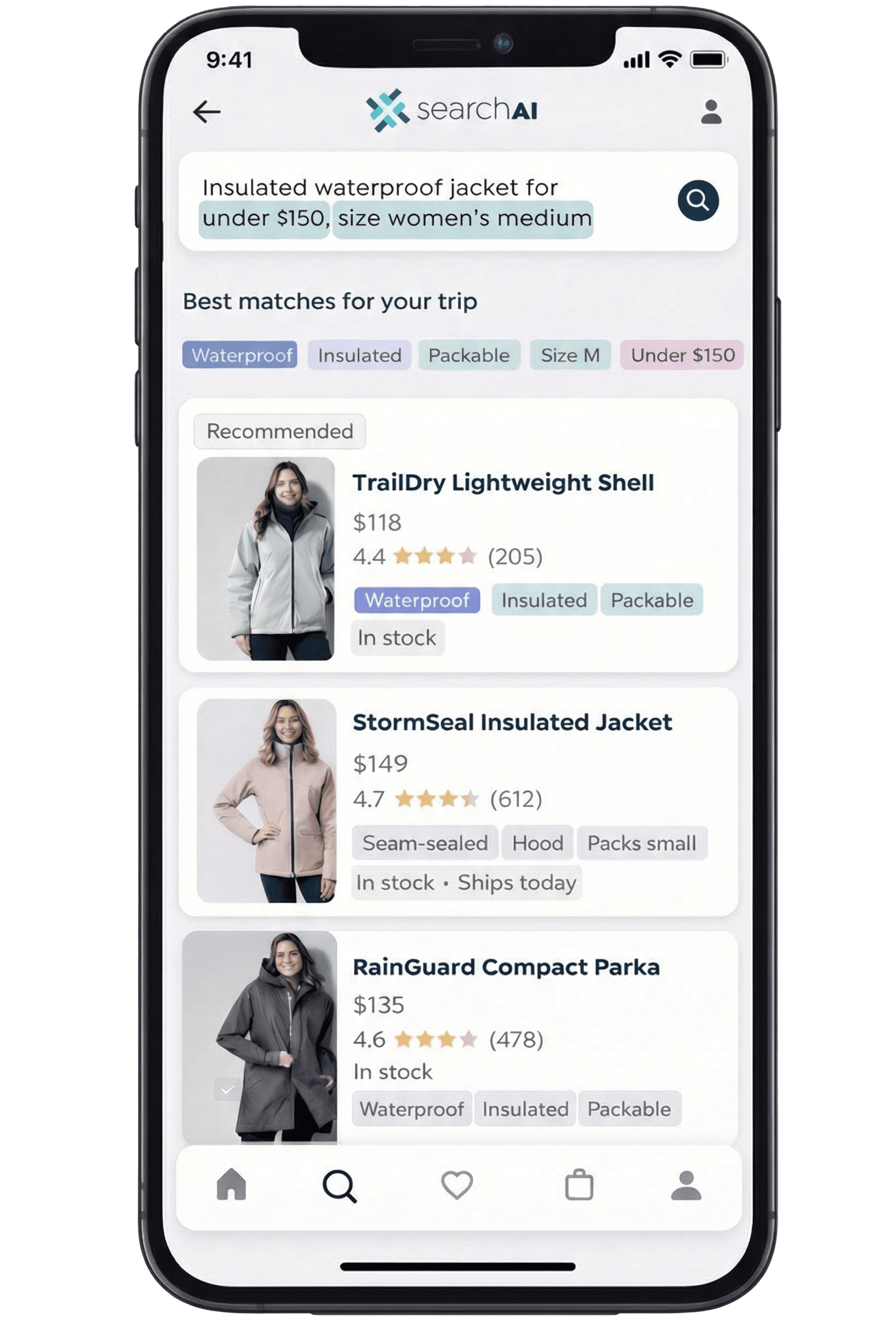
Product Discovery
AI ChatBot
AI Overviews
Hybrid Search (Keyword + Vector)
Searches by keywords + meaning
Returns relevant files
Ranks by similarity
Works at the catalog level
Hybrid Search with Knowledge Graph
Connects people, products, vendors, systems
Understands how they relate
Surfaces hidden relationships
Works at entity and relationship level
Product Discovery
AI ChatBot
AI Overviews
Hybrid Search (Keyword + Vector)
Searches by keywords + meaning
Returns relevant files
Ranks by similarity
Works at the catalog level
Hybrid Search with Knowledge Graph
Connects people, products, vendors, systems
Understands how they relate
Surfaces hidden relationships
Works at entity and relationship level

Knowledge Graph-Powered by SearchAI
Knowledge Graph-Powered by SearchAI
Smarter Discovery. Contextual AI. Connected Intelligence.
Smarter Discovery. Contextual AI. Connected Intelligence.
Intelligent Product Discovery
Intelligent Product Discovery
SearchAI uses its knowledge graph to understand product attributes, features, categories, and real relationships — not just keywords.
Context-Aware AI Chat
Context-Aware AI Chat
SearchAI’s ChatBot is grounded in structured enterprise knowledge. The knowledge graph links entities, policies, products, and documents — allowing responses to reflect relationships, not isolated chunks.
AI Overviews
AI Overviews
SearchAI enhances AI-generated summaries by grounding responses in entity relationships. Instead of generic summaries, answers are built from connected knowledge.
Relationship-Driven AI Agents
Relationship-Driven AI Agents
SearchAI’s agents leverage the knowledge graph to navigate dependencies across systems — connecting data, workflows, and decision logic.
Knowledge Graph-Powered by SearchAI
Smarter Discovery. Contextual AI. Connected Intelligence.
Intelligent Product Discovery
SearchAI uses its knowledge graph to understand product attributes, features, categories, and real relationships — not just keywords.
Context-Aware AI Chat
SearchAI’s ChatBot is grounded in structured enterprise knowledge. The knowledge graph links entities, policies, products, and documents — allowing responses to reflect relationships, not isolated chunks.
AI Overviews
SearchAI enhances AI-generated summaries by grounding responses in entity relationships. Instead of generic summaries, answers are built from connected knowledge.
Relationship-Driven AI Agents
SearchAI’s agents leverage the knowledge graph to navigate dependencies across systems — connecting data, workflows, and decision logic.
Feeling overwhelmed?
Feeling overwhelmed?
Feeling overwhelmed?
We can help.
We can help.
We can help.
Schedule a private consultation to see how SearchAI Knowledge Graph will make a difference across Product Discovery, AI Overviews, and Customer Support.
Schedule a private consultation to see how SearchAI Knowledge Graph will make a difference across Product Discovery, AI Overviews, and Customer Support.

Break Down Data Silos
Break Down Data Silos
Knowledge graphs unify data from disparate sources — CRM, ERP, content repositories, legacy systems — into an interconnected view. This eliminates fragmentation and gives teams a single source of truth to explore and analyze.
Knowledge graphs unify data from disparate sources — CRM, ERP, content repositories, legacy systems — into an interconnected view. This eliminates fragmentation and gives teams a single source of truth to explore and analyze.
Smarter Enterprise Search
Traditional search finds keywords. Knowledge graphs find meaningful connections across your information. This means users can ask questions in natural language and receive context-aware answers that reflect intent, not just matching terms.
Smarter Enterprise Search
Traditional search finds keywords. Knowledge graphs find meaningful connections across your information. This means users can ask questions in natural language and receive context-aware answers that reflect intent, not just matching terms.
Trustworthy AI & Contextual Response
Trustworthy AI & Contextual Response
Large language models (LLMs) can generate fluent text — but without context, they can hallucinate or provide inaccurate answers. Knowledge graphs ground AI with factual business knowledge, ensuring responses are accurate, reliable and explainable.
Large language models (LLMs) can generate fluent text — but without context, they can hallucinate or provide inaccurate answers. Knowledge graphs ground AI with factual business knowledge, ensuring responses are accurate, reliable and explainable.

Improved Data Quality
Improved Data Quality
By defining entities, attributes, and relationships centrally, knowledge graphs help standardize how information is represented across systems. This reduces duplication, resolves inconsistencies, and ensures teams are working with accurate, trusted data — improving confidence in analytics and decision-making.
By defining entities, attributes, and relationships centrally, knowledge graphs help standardize how information is represented across systems. This reduces duplication, resolves inconsistencies, and ensures teams are working with accurate, trusted data — improving confidence in analytics and decision-making.

Accelerated Time-to-Value
Knowledge graphs reduce the time spent searching, reconciling, and interpreting data across silos. Teams can move from question to insight faster, enabling quicker experimentation, faster project delivery, and measurable productivity gains across the organization.
Accelerated Time-to-Value
Knowledge graphs reduce the time spent searching, reconciling, and interpreting data across silos. Teams can move from question to insight faster, enabling quicker experimentation, faster project delivery, and measurable productivity gains across the organization.
Why Adopt Knowledge Graphs
Why Adopt Knowledge Graphs
Knowledge Graphs connect data across various data sources. Learn how organizations can harness the power of Knowledge Graphs to improve customer services, shorten service times, and improve product discovery.
Knowledge Graphs connect data across various data sources. Learn how organizations can harness the power of Knowledge Graphs to improve customer services, shorten service times, and improve product discovery.
Industry Applications
Industry Applications
Knowledge Graphs in Action
Knowledge Graphs in Action
Knowledge Graphs help businesses realize their potential, infusing a data-driven culture where AI drives exponential returns.
Knowledge Graphs help businesses realize their potential, infusing a data-driven culture where AI drives exponential returns.
Enterprise Search & Knowledge Discovery
Enterprise Search & Knowledge Discovery
Knowledge Graphs help organizations Improve internal search practices to enable employees to find answers quickly, thus boosting productivity and reducing support costs.
Knowledge Graphs help organizations Improve internal search practices to enable employees to find answers quickly, thus boosting productivity and reducing support costs.
AI-Driven Applications
AI-Driven Applications
Knowledge Graphs help to ground AI models used by organizations in structured business logic leading to reduced hallucinations, increased accuracy, and improved answers.
Knowledge Graphs help to ground AI models used by organizations in structured business logic leading to reduced hallucinations, increased accuracy, and improved answers.
Compliance & Risk Intelligence
Compliance & Risk Intelligence
Knowledge Graphs enable organizations to map relationships across entities to highlight risk, ensure audits, and adhere to regulations.
Knowledge Graphs enable organizations to map relationships across entities to highlight risk, ensure audits, and adhere to regulations.
Master Data Management
Master Data Management
Commercial organizations can use Knowledge Graphs to unify customer, product, and asset records across systems for consistent, trusted insights.
Commercial organizations can use Knowledge Graphs to unify customer, product, and asset records across systems for consistent, trusted insights.
Recommendation & Personalization Engines
Recommendation & Personalization Engines
Knowledge graphs enable smarter recommendations by understanding real relationships between users, products, and behaviors. They connect customer activity, product attributes, and purchase history to deliver highly personalized search results and product recommendations.
Knowledge graphs enable smarter recommendations by understanding real relationships between users, products, and behaviors. They connect customer activity, product attributes, and purchase history to deliver highly personalized search results and product recommendations.
Operational Intelligence & Process Optimization
Operational Intelligence & Process Optimization
Enterprise operations generate massive amounts of structured and unstructured data — SOPs, incident reports, tickets, logs, performance metrics, and system dependencies. On their own, these data sources provide limited visibility.
Enterprise operations generate massive amounts of structured and unstructured data — SOPs, incident reports, tickets, logs, performance metrics, and system dependencies. On their own, these data sources provide limited visibility.
Getting Started
Getting Started
Build Your Enterprise Knowledge Graph with SearchAI
Build Your Enterprise Knowledge Graph with SearchAI
SearchAI’s knowledge graph creates a living semantic layer across your enterprise systems. By connecting entities, modeling relationships, and integrating hybrid retrieval, it transforms fragmented data into structured intelligence that powers product discovery, AI chat, overviews, and intelligent agents.
SearchAI’s knowledge graph creates a living semantic layer across your enterprise systems. By connecting entities, modeling relationships, and integrating hybrid retrieval, it transforms fragmented data into structured intelligence that powers product discovery, AI chat, overviews, and intelligent agents.
Get started by connecting your data sources, defining your knowledge model, and enabling hybrid retrieval that combines keywords, semantics, and knowledge graph relationships.
Get started by connecting your data sources, defining your knowledge model, and enabling hybrid retrieval that combines keywords, semantics, and knowledge graph relationships.
Here is your roadmap to deploying SearchAI with knowledge graphs:
Here is your roadmap to deploying SearchAI with knowledge graphs:
Here is your roadmap to deploying SearchAI with knowledge graphs:
1. Define Business-Critical Entities and Relationships
2. Integrate Enterprise Data Sources
3. Enable Entity & Relationship Extraction
4. Build the Hybrid Semantic Index
5. Power Product Discovery & eCommerce Search
6. Ground AI Chat & AI Overviews
7. Enable Relationship-Driven AI Agents
8. Deploy with Enterprise Flexibility
Continuously Refine the Semantic Layer
Book a Personalized Demo
Build your Connected Enterprise Semantic Layer
Build your Connected Enterprise Semantic Layer
Build your Connected Enterprise Semantic Layer
Improve discovery, accuracy, and confidence by connecting enterprise knowledge into a single semantic layer that powers contextual search and explainable AI experiences.
Improve discovery, accuracy, and confidence by connecting enterprise knowledge into a single semantic layer that powers contextual search and explainable AI experiences.
Enhance your users’ digital experience.
Security & Compliance
Certifications



SearchAI is SOC 2 attested, HIPAA aligned, ISO/IEC 27001:2022 certified and ISO/IEC 42001:2023 certified.
We build AI-driven software to help organizations leverage their unstructured, and structured data for operational success.
4870 Sadler Road, Suite 300, Glen Allen, VA 23060 sales@searchblox.com | (866) 933-3626





Still learning about AI? See our comprehensive Enterprise Search, Knowledge Graph 101, RAG 101, ChatBot 101, and AI Agents 101 guides.
©2026 SearchBlox Software, Inc. All rights reserved.
Enhance your users’ digital experience.
Security & Compliance
Certifications
SearchAI is SOC 2 attested, HIPAA aligned, and ISO/IEC 27001:2022 certified.
We build AI-driven software to help organizations leverage their unstructured, and structured data for operational success.
4870 Sadler Road, Suite 300, Glen Allen, VA 23060 sales@searchblox.com | (866) 933-3626
Still learning about AI? See our comprehensive Enterprise Search, Knowledge Graph 101, RAG 101, ChatBot 101, and AI Agents 101 guides.
©2026 SearchBlox Software, Inc. All rights reserved.
Enhance your users’ digital experience.
Security & Compliance
Certifications
SearchAI is SOC 2 attested, HIPAA aligned, ISO/IEC 27001:2022 certified and ISO/IEC 42001:2023 certified.
We build AI-driven software to help organizations leverage their unstructured, and structured data for operational success.
4870 Sadler Road, Suite 300, Glen Allen, VA 23060 sales@searchblox.com | (866) 933-3626
Still learning about AI? See our comprehensive Enterprise Search, Knowledge Graph 101, RAG 101, ChatBot 101, and AI Agents 101 guides.
©2026 SearchBlox Software, Inc. All rights reserved.